
The Convergence Brief

Technology. Threats. Consequences.

Analysis by Mark Shelhart

Examining where emerging technology, physical infrastructure, intelligence, and cybersecurity intersect—and what organizations should do before those intersections become operational crises.

  • Operational Recovery Is Not Investigative Closure

    Why restoring business operations after a cyberattack does not necessarily establish the full scope of a compromise.

    By Mark Shelhart

    The systems are back online. Employees have returned to work. Customers are being served. Revenue is moving again.

    Is the cybersecurity incident over?

    Not necessarily, Incident Response is often a “2-step” process.

    During a cybersecurity crisis, executive leadership naturally wants to know when business operations can resume. It is an important question, but it is not the only question that determines whether an incident has been successfully resolved. “Are we safe?” and “What did they access? are often the next questions.

    An organization may restore critical services while investigators are still determining which systems were accessed, what information was exposed, and whether related environments were affected.

    Conversely, investigators may establish the scope of a compromise well before an organization can safely resume operations.

    Operational recovery and investigative closure are distinct objectives. Leadership must understand the difference.

    As organizations become increasingly dependent on cloud services, operational technology, artificial intelligence, and third-party infrastructure, that distinction becomes even more consequential.

    What real-world incidents reveal

    The September 2023 cybersecurity incident involving MGM Resorts International illustrates the distinction between restoring business functionality and investigating data exposure.

    By October 5, MGM reported in its Form 8-K disclosure that domestic property operations had returned to normal and nearly all customer-facing systems had been restored.

    However, its customer information update, issued the same day, described unauthorized access to personal information and the resulting customer notification efforts.

    Returning to normal business operations did not eliminate the need to address the consequences of the compromise.

    The February 2024 cyberattack involving Change Healthcare provides another example, this time involving critical dependencies across an entire industry.

    On March 7, 2024, UnitedHealth Group reported progress toward restoring pharmacy, payment, and medical claims functionality.

    Yet the process of determining and communicating the extent of the data exposure continued over a much longer period.

    According to the U.S. Department of Health and Human Services, Change Healthcare reported approximately 192.7 million affected individuals by July 31, 2025.

    These incidents illustrate an important distinction.

    The timeline for restoring services is not necessarily the timeline for establishing the consequences of unauthorized access.

    They also demonstrate why incident response must account for customers, business partners, third-party dependencies, regulatory requirements, and downstream operational consequences.

    Three objectives, three timelines

    Organizations should distinguish between three fundamental objectives during incident response.

    Threat containment: Restricting unauthorized activity, limiting further exposure, and preventing additional damage.

    Operational recovery: Restoring critical business functions to an acceptable and appropriately validated operating condition.

    Investigative closure: Establishing the scope and consequences of the compromise to a defensible level of confidence, documenting remaining uncertainties, and addressing outstanding investigative requirements.

    These objectives overlap, but they are not interchangeable.

    Containment may enable recovery before an investigation is complete.

    Investigative findings may require additional containment or remediation after certain operations have resumed.

    Recovery itself may reveal previously unidentified dependencies that require further investigation.

    The relationship between these objectives is dynamic rather than strictly sequential.

    Treating incident response as a single linear process can obscure important decisions and create unnecessary delays.

    The problem with declaring an incident resolved

    An organization’s ability to resume operations does not establish that every affected identity, asset, application, or data repository has been identified.

    Consider a hypothetical enterprise that experiences a compromise involving its cloud infrastructure.

    The organization restores affected workloads, rotates credentials, validates critical services, and resumes normal operations.

    Several investigative questions may remain:

    • Which identities and permissions were used during the compromise? Does this mean reset all passwords?
    • Were additional environments accessed through trusted relationships?
    • What information was viewed, modified, or transferred?
    • Were third-party applications or service providers affected?
    • Does the available telemetry provide sufficient visibility into the relevant period? Be prepared for this to be “no”.
    • Could unauthorized access persist outside the recovered environment?

    These questions cannot necessarily be answered by demonstrating that systems are functional.

    Functionality and security assurance measure different conditions.

    A restored application may perform exactly as expected while questions concerning historical unauthorized access remain unresolved.

    This is particularly important when reporting to executive leadership, customers, insurers, regulators, and legal counsel.

    The terminology used to describe the status of an incident should accurately reflect what has been established.

    Investigative scoping is not simply a matter of investigating more

    A common misconception is that a more comprehensive investigation necessarily requires examining every available system.

    Effective incident response requires experienced precision.

    Investigative scope should be informed by credible evidence, adversary behavior, identity relationships, system architecture, operational dependencies, and potential exposure.

    Threat intelligence can help establish which adversarial techniques are relevant to the investigation.

    Threat hunting can help identify activity that existing detection mechanisms did not recognize.

    Threat modeling can help investigators understand how a compromise could extend into connected environments.

    Detection engineering can help distinguish meaningful anomalies from unrelated activity.

    Together, these capabilities allow investigators to expand or narrow the scope based on evidence rather than assumptions.

    The objective is not simply to collect more information.

    The objective is to reduce uncertainty in the areas that matter most.

    This becomes particularly valuable when investigative resources are limited and business leadership is under pressure to restore operations.

    Evidence preservation and recovery must be coordinated

    Operational recovery can introduce challenges for an ongoing investigation.

    Rebuilding systems, replacing infrastructure, rotating credentials, restoring backups, and modifying configurations may alter or eliminate information relevant to understanding the compromise.

    These actions may be necessary. However, their timing and execution should account for investigative requirements.

    Incident response teams should coordinate with recovery teams to determine which evidence can reasonably be preserved before significant environmental changes occur. This happens at one of the most stressful times of the response.

    This may include relevant logs, system artifacts, identity records, cloud audit trails, configuration information, and other available forensic evidence.

    The appropriate approach depends on the environment, the urgency of the situation, and the potential consequences of delaying recovery.

    In certain circumstances, protecting human safety or restoring essential services must take precedence over collecting additional evidence.

    The important distinction is that these decisions should be deliberate, documented, and informed by the consequences.

    The convergence of IT, OT, and AI complicates recovery

    In conventional IT environments, organizations may have established procedures for rebuilding endpoints and restoring applications. However, increasingly interconnected operational environments introduce additional considerations.

    An industrial control system may require physical verification before it can safely resume operations.

    A connected facility may rely on equipment operated by external service providers.

    An AI application may depend on model integrity, data pipelines, privileged tools, and automated workflows that extend beyond the application itself.

    Restoring an AI service does not necessarily establish that its environment and associated permissions remain trustworthy.

    Similarly, bringing an operational technology system back online does not necessarily establish that its configurations and physical processes are functioning within approved parameters.

    Recovery criteria must account for the environment being recovered.

    As discussed in my previous article, The AI Infrastructure Boom Is Creating a New Security Perimeter, the boundaries of an organization’s exposure increasingly follow its dependencies rather than its traditional network perimeter.

    Investigative scope and recovery planning must follow those dependencies as well.

    Threat actor communications are not independent verification

    During certain cybersecurity incidents, organizations may receive communications from threat actors claiming to possess sensitive information, control compromised systems, or have the ability to restore access.

    These communications can provide information relevant to an investigation, but they must be evaluated independently.

    A threat actor’s claim concerning what was accessed does not establish the full scope of unauthorized access.

    A promise to delete information does not constitute reliable evidence that all copies have been destroyed but may be all you get.

    Even when negotiations result in the restoration of access to certain systems or information, other investigative and remediation requirements may remain.

    Authorized threat actor communications and negotiations should therefore be coordinated with technical investigators, executive leadership, legal counsel, and other appropriate stakeholders.

    Commercial decisions made during an incident must not be mistaken for technical verification.

    Measuring incident response success

    In April 2025, the National Institute of Standards and Technology published SP 800-61 Revision 3, integrating incident response more broadly into cybersecurity risk management under the NIST Cybersecurity Framework 2.0.

    This integration is important because the consequences of an incident extend beyond the immediate technical response.

    Organizations should establish separate measures for containment, operational recovery, and investigative progress.

    Recovery metrics may include service availability, restoration time, operational capacity, data integrity, and validation against safety requirements.

    Investigative metrics may include the extent of relevant telemetry coverage, identification of affected assets and identities, validation of suspected activity, and confidence in determining the scope of compromise.

    Containment metrics should address whether identified unauthorized access has been interrupted and whether meaningful evidence of continued adversarial activity remains.

    These measures should inform one another without being treated as equivalent.

    An organization can achieve its recovery objectives while continuing to address investigative uncertainties.

    The decision point: Five questions leadership should ask

    During an incident, executives should ask questions that distinguish operational status from investigative confidence.

    First: What have we actually contained?

    Identify the unauthorized activity that has been addressed, the evidence supporting that conclusion, and any restrictions that remain necessary.

    Second: Which operations can safely resume?

    Establish the conditions for restoring critical services, including technical validation, operational requirements, and appropriate approval.

    Third: What do we know about the scope of the compromise?

    Distinguish confirmed findings from suspected activity and unresolved questions.

    Fourth: What limitations affect our investigative confidence?

    Identify gaps in telemetry, third-party visibility, evidence availability, and the ability to reconstruct historical activity.

    Fifth: What obligations remain after recovery?

    Consider ongoing investigation, customer communication, regulatory notifications, remediation, monitoring, and improvements to security controls.

    These questions allow leadership to make informed decisions without demanding certainty that the available evidence cannot support.

    Recovery is a milestone, not necessarily the conclusion

    Organizations have legitimate reasons to restore business operations as quickly as possible.

    Extended downtime can threaten revenue, customer relationships, contractual obligations, public safety, and the viability of the business itself.

    However, urgency does not eliminate the need for investigative rigor.

    Effective incident response requires the ability to pursue operational recovery and investigative objectives in parallel, with clear priorities, defined responsibilities, and appropriate coordination.

    The goal is not to keep an investigation open indefinitely. It is to establish a defensible understanding of what occurred, address material uncertainties, and ensure that leadership understands the remaining risk.

    As technological dependencies become more complex, the interval between restoring functionality and establishing the full scope of a compromise may become increasingly significant.

    Organizations should prepare for that possibility before an incident occurs.

    The business may be back online. The security questions may not yet be answered.

    Operational recovery is not investigative closure.


    About the author

    Mark Shelhart is a cybersecurity and AI executive with extensive international incident response experience and a background building and leading cybersecurity services operations. His expertise spans detection engineering, threat intelligence, threat hunting, incident response, and security risk assessment across increasingly interconnected digital and physical environments.

    Advisory focus: IT, OT, threat intelligence, AI security, and enterprise risk profiling.
  • The AI Infrastructure Boom Is Creating a New Security Perimeter

    The AI Infrastructure Boom Is Creating a New Security Perimeter

    Why the convergence of artificial intelligence, operational technology, cloud infrastructure, and physical systems demands a different approach to cyber defense.

    By Mark Shelhart

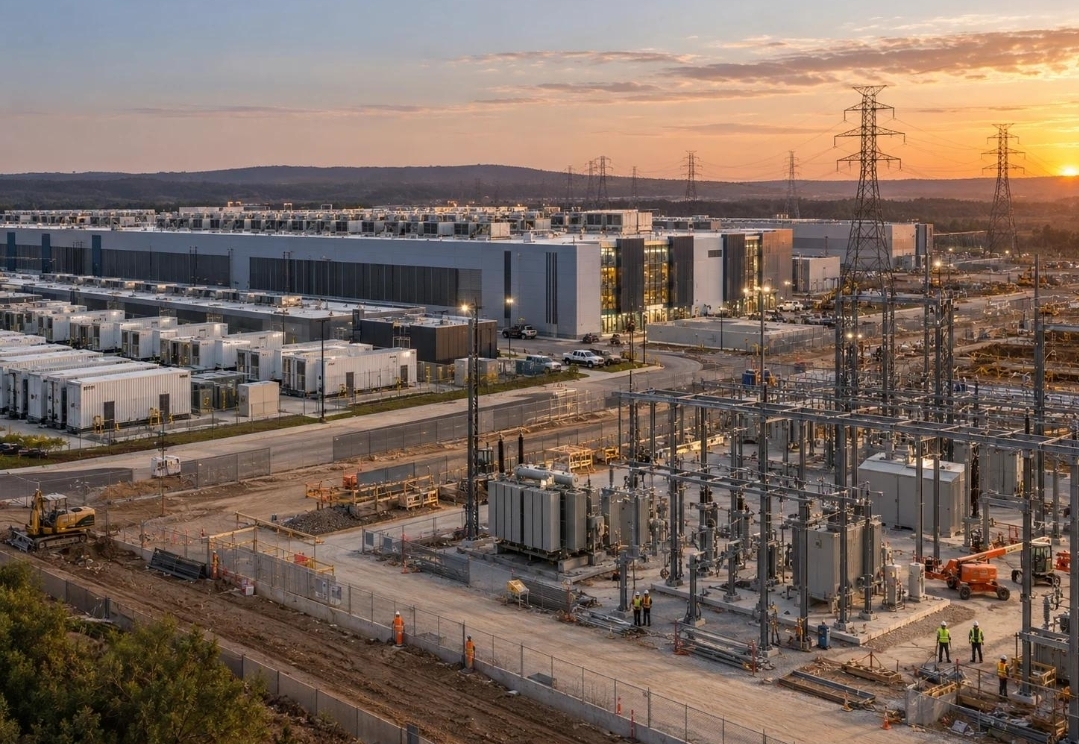
    The race to build artificial intelligence infrastructure is accelerating. Technology companies are expanding data center capacity, deploying new generations of processors, securing energy supplies, and integrating increasingly autonomous systems into enterprise operations. We must be aware of our new layer(s) of dependency.

    But beneath the announcements about compute capacity, capital investment, and AI performance lies a less-discussed question:

    Who is responsible for securing everything that makes AI possible?

    The answer extends well beyond traditional information technology and is not something you can entirely write off into a 3rd party agreement.

    Modern AI infrastructure depends on interconnected computing systems, specialized hardware, firmware, networking, physical facilities, power distribution, cooling systems, industrial controls, cloud platforms, and third-party services.

    Each introduces dependencies. Each creates potential exposure. And each complicates the decisions organizations must make when something goes wrong.

    The next generation of cybersecurity cannot focus exclusively on protecting information and privacy. It must also protect the infrastructure, operations, and increasingly autonomous systems that process information and act upon it.

    The infrastructure race is already underway

    Consider several developments from 2026.

    On November 17, Microsoft and Intel announced an expanded collaboration covering Azure infrastructure, advanced chip packaging, memory efficiency, confidential computing, and future server processors. The agreement reflects the increasing integration of silicon design, cloud engineering, and security architecture.

    In October, NVIDIA and Oracle announced the expansion of Oracle Cloud Infrastructure superclusters using NVIDIA’s Vera Rubin systems, with plans to support AI infrastructure at multi-gigawatt scale.

    NVIDIA’s November financial announcements also described the expansion of its AI infrastructure ecosystem across major cloud providers and the development of new security capabilities for autonomous AI agents.

    Meanwhile, AI infrastructure is becoming inseparable from energy infrastructure.

    In September, Reuters reported Google’s plans to invest approximately $15 billion in Finnish AI infrastructure, including new data centers, grid improvements, battery projects, and a long-term nuclear electricity arrangement.

    These developments represent more than a new computing cycle.

    They illustrate a structural change in how digital services are built, powered, operated, and secured.

    The AI data center is no longer simply a building filled with servers. It is an interconnected operational environment.

    The security perimeter is becoming multidimensional

    Traditional enterprise cybersecurity was largely organized around networks, endpoints, identities, applications, and data.

    Those domains remain essential. But AI infrastructure introduces additional layers that must be considered together.

    Information technology (IT) includes enterprise networks, operating systems, applications, cloud workloads, identity systems, and data services.

    Operational technology (OT) includes the systems responsible for monitoring and controlling physical processes, such as electrical distribution, cooling, building automation, and industrial equipment.

    AI security introduces additional concerns involving models, training and inference infrastructure, data pipelines, agents, tools, permissions, and autonomous decision-making.

    These domains cannot always be defended independently. For example, authentication is something that applies across all of these different domains and for different reasons.

    A compromise affecting an identity provider may enable access to cloud management systems. A vulnerable management interface may expose privileged infrastructure functions. A misconfigured automation workflow may take actions across multiple systems faster than human operators can evaluate them.

    A disruption to cooling or power management may affect computing availability even when the AI application itself remains uncompromised.

    These are different failure scenarios, but they share an important characteristic: the operational consequences cross conventional security boundaries.

    The overlooked layer: infrastructure below the operating system

    Many organizations concentrate security monitoring at the operating-system, application, and network layers.

    AI computing environments also rely on specialized components with their own firmware, management interfaces, and privileged execution paths.

    GPUs, data processing units, baseboard management controllers, network adapters, and other infrastructure components require their own security considerations.

    In October, NVIDIA and Eclypsium described work focused on hardware and firmware assurance for AI infrastructure, including continuous monitoring for configuration drift and unauthorized modifications.

    Their published research also highlighted a significant distinction: verifying the integrity of a stored AI model does not necessarily establish the integrity of the model as it executes in memory.

    This is a very important distinction that leadership and operations should understand.

    A system can pass one type of integrity check while remaining exposed to compromise elsewhere in its execution environment.

    Organizations should therefore ask whether their monitoring provides meaningful visibility into the infrastructure supporting AI workloads—not simply the workloads themselves.

    Hardware-rooted protections, firmware integrity assessments, independent verification, secure management interfaces, and runtime monitoring serve complementary purposes.

    No single control provides complete assurance.

    IT and OT security must converge without becoming interchangeable

    AI data centers rely on physical infrastructure that must remain available, stable, and safe.

    Power systems, cooling equipment, building automation, and environmental controls may use operational technologies with requirements fundamentally different from conventional enterprise IT.

    A security response that is appropriate for a compromised office workstation may be unacceptable for an industrial control system.

    Disconnecting a device, restarting a controller, or automatically isolating a network segment can have consequences for physical operations.

    This is why security convergence does not mean applying identical controls everywhere.

    In April 2026, CISA and U.S. government partners published guidance on adapting Zero Trust principles to operational technology, emphasizing asset visibility, supply-chain security, identity, and access management.

    Earlier joint guidance on integrating AI into OT also emphasized governance, safety, human oversight, and fail-safe mechanisms.

    The principle is straightforward:

    Security controls must account for the operational environment they are intended to protect.

    A successful response protects both digital assets and the physical processes that depend on them.

    Detection must follow business consequences

    As infrastructure becomes more complex, security operations centers face an increasingly difficult challenge.

    The problem is not simply detecting suspicious activity.

    It is determining which activity matters most, what it may affect, and how quickly the organization must respond.

    A security information and event management platform (SIEM) can collect enormous volumes of telemetry without necessarily providing the context required for effective prioritization.

    AI in security orchestration, automation, and response platforms (SOAR) can accelerate workflows, but automation is only as useful as the logic, authority, and operational safeguards behind it.

    Consider three hypothetical alerts:

    • An unusual authentication attempt against a low-privilege development account.
    • An unexpected firmware configuration change on a privileged infrastructure management component.
    • An unauthorized command directed toward a system involved in facility cooling.

    All three warrant evaluation. But their urgency depends on exposure, confidence, system criticality, potential impact, and the availability of safe containment options.

    The appropriate response order cannot be determined from alert severity alone.

    Detection engineering should connect technical signals to operational consequences.

    That requires accurate asset inventories, business context, tested detection logic, and escalation procedures that distinguish ordinary IT incidents from events affecting critical infrastructure.

    Incident response must become more precise

    When an incident occurs in a converged environment, investigators need to establish what was affected without unnecessarily disrupting systems that remain operational.

    That requires targeted incident response scoping.

    An effective investigation should establish:

    1. Which identities, assets, and management interfaces may be compromised?
    2. What access paths connect the affected environment to other systems?
    3. Which telemetry sources can confirm or refute suspected activity?
    4. Could the incident affect physical operations, safety, or service availability?
    5. Which containment actions can be performed safely and reversibly?
    6. What evidence must be preserved before recovery or remediation?

    The objective is not to investigate everything indiscriminately.

    It is to reduce uncertainty efficiently while protecting the organization’s most critical functions.

    Threat intelligence and threat hunting support this process when they are grounded in relevant adversary behavior, observable techniques, and the architecture of the environment being defended.

    Threat modeling should also account for dependencies that may not appear in traditional network diagrams, including external service providers, equipment management channels, automation platforms, and facility operations.

    Autonomous AI changes the question of authority

    Agentic AI introduces another dimension.

    An AI system that produces recommendations presents one category of risk.

    An AI system authorized to execute commands, modify configurations, retrieve sensitive information, or operate enterprise tools presents another.

    In May 2026, CISA and international partners published guidance addressing the careful adoption of agentic AI, including the risks associated with excessive privileges, insufficient oversight, and interconnected autonomous operations.

    As AI systems gain the ability to act, organizations need to establish explicit boundaries around what those systems may access, what decisions they may make, and what actions require human approval.

    Those boundaries must be enforceable, observable, and tested.

    A particularly important distinction is between an AI system that recommends a response and one that can execute it.

    For security operations, the difference may determine whether an automated workflow helps contain an incident or inadvertently amplifies it.

    The decision point: What should executives prioritize?

    For CEOs, boards, CISOs, CIOs, and infrastructure operators, the challenge is not to master every technical component of the AI ecosystem.

    It is to ensure the organization understands its dependencies and has assigned responsibility for managing them.

    Five questions deserve immediate attention.

    First: Do we know what we operate?

    An accurate inventory (including 3rd parties) should extend beyond conventional IT assets to include critical firmware, management interfaces, operational systems, connected devices, and AI service dependencies.

    Second: Can we detect meaningful changes?

    Monitoring should cover privileged activity, configuration changes, identity misuse, infrastructure management, and relevant operational anomalies.

    Third: Are our response priorities tied to business impact?

    Incident severity should reflect potential effects on critical operations, data, safety, service delivery, and recovery.

    Fourth: Have we tested our automation boundaries?

    Automated security actions and AI agents should operate within defined permissions, with safeguards appropriate to their potential consequences.

    Fifth: Can our teams (and our partners’ teams) respond across domains?

    IT security, OT engineering, facility operations, cloud teams, legal counsel, and executive leadership need established coordination mechanisms before an incident occurs.

    These questions are not specific to one technology vendor.

    They are governance and operational requirements for organizations increasingly dependent on connected infrastructure.

    The next security perimeter is defined by dependency

    The expansion of AI infrastructure will continue to connect systems that were historically managed, secured, and governed separately.

    Computing depends on energy. AI services depend on hardware and cloud platforms. Operational systems depend on connected networks. Automated decisions depend on identity, permissions, data integrity, and the systems authorized to carry them out.

    The result is a security environment in which the consequences of compromise cannot be understood by examining any single component in isolation. The time to recovery of a breach is likely going to be very exponentially seprate from determining “what all was accessed”

    The organizations best prepared for this environment will be those that connect threat intelligence, detection engineering, incident response, operational risk, and executive decision-making.

    The new security perimeter is not a firewall, a building, or a cloud account. It is the network of dependencies an organization cannot afford to lose.

    And securing that perimeter begins with understanding where those dependencies intersect.


    About the author

    Mark Shelhart is a cybersecurity and AI executive with international incident response experience and a background building and leading cybersecurity services operations. His areas of expertise include incident response, detection engineering, threat intelligence, threat hunting, AI security, and security risk assessment across connected enterprise environments.

    Advisory focus: IT, OT, Threat Intelligence and AI security; and enterprise risk profiling.